

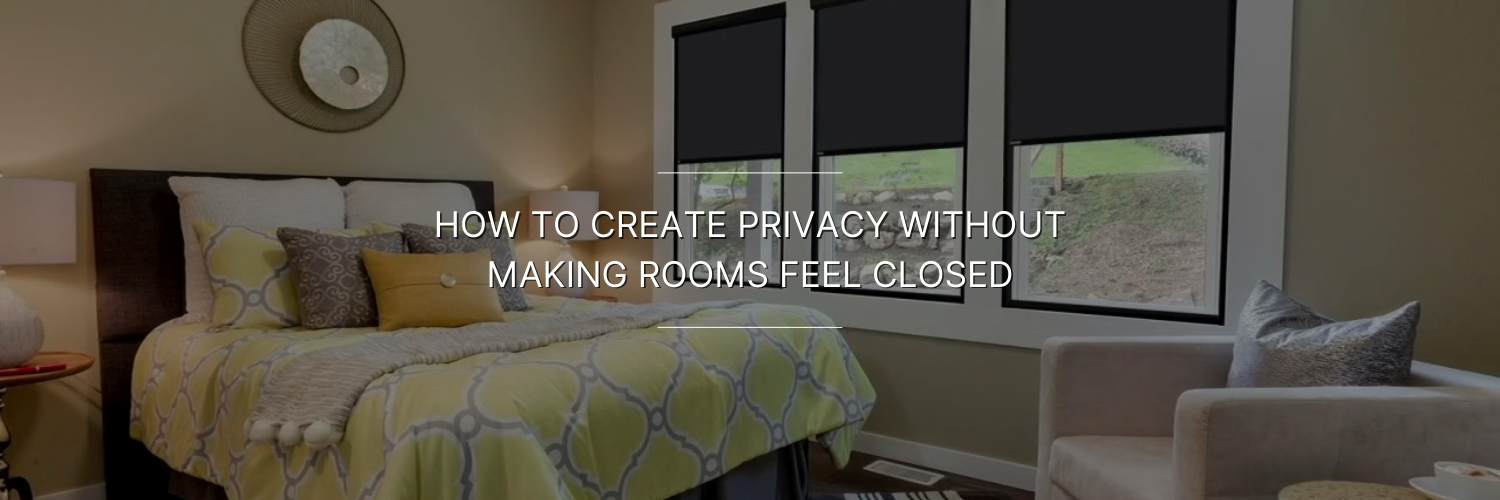
Privacy is essential in any home, especially in apartments and closely built neighbourhoods. At the same time, no one wants rooms that feel dark, boxed in, or cut off from the outside world. The key lies in choosing window treatments that protect privacy while still allowing light, air, and openness to flow through the space. This balance is achieved through smart blind choices and thoughtful layering. In this blog you’ll learn how to create privacy without blocking light at home:
Privacy Does Not Have to Mean Darkness
Many homes rely on heavy curtains for privacy, but these often block light entirely. This creates rooms that feel closed even during the day. A better approach is to use window treatments that filter or redirect light instead of stopping it.
Sheer blinds are a strong example. They allow daylight to enter softly while blurring outside views. During the day, rooms remain bright and visually open, yet private. This makes sheer blinds ideal for living rooms, dining areas, and spaces that face neighbouring buildings.
Wooden Venetian Blinds for Controlled Visibility
Wooden Venetian blinds offer one of the most flexible privacy solutions. Their adjustable slats allow you to control sightlines precisely. You can block direct views while still letting light in by tilting the slats upward or downward.
The natural texture of wood also adds warmth, preventing the space from feeling clinical. Wooden Venetians work especially well in living rooms and bedrooms where privacy needs change through the day. They allow openness in the morning and discretion in the evening without changing the entire setup.
Layered Systems Create Adaptable Spaces
Layering is one of the most effective ways to balance privacy and openness. A layered window system typically combines blinds with curtains. Blinds handle everyday light control and privacy, while curtains add softness and complete coverage when needed.
For example, sheer blinds can be used throughout the day, maintaining brightness and privacy. In the evening, curtains can be drawn for a more enclosed, cosy feel. Curtain tracks and rods help keep this setup clean and functional without visual clutter.
Layered systems work particularly well in bedrooms and living rooms where the mood of the space shifts between day and night.
Using Light to Your Advantage
Privacy feels easier to achieve when light is managed well. Rooms that are evenly lit feel open, even when views are blocked. Soft, filtered light reduces contrast and prevents the sense of being closed off.
Motorised blinds make this even smoother by allowing small adjustments throughout the day. Light changes without disruption, keeping the room comfortable and visually balanced.
Designing for Comfort, Not Just Coverage
Privacy should feel reassuring, not restrictive. When window treatments respond to how a space is used, rooms feel protected without losing their sense of openness. The goal is not to hide the home from the outside, but to control how it is seen.
Conclusion
Creating privacy does not require shutting rooms off from light and space. Wooden Venetian blinds offer directional control, sheer blinds soften views while maintaining brightness, and layered systems allow homes to adapt easily through the day. When privacy is designed thoughtfully, rooms feel calm, open, and comfortable, proving that protection and openness can exist together.