

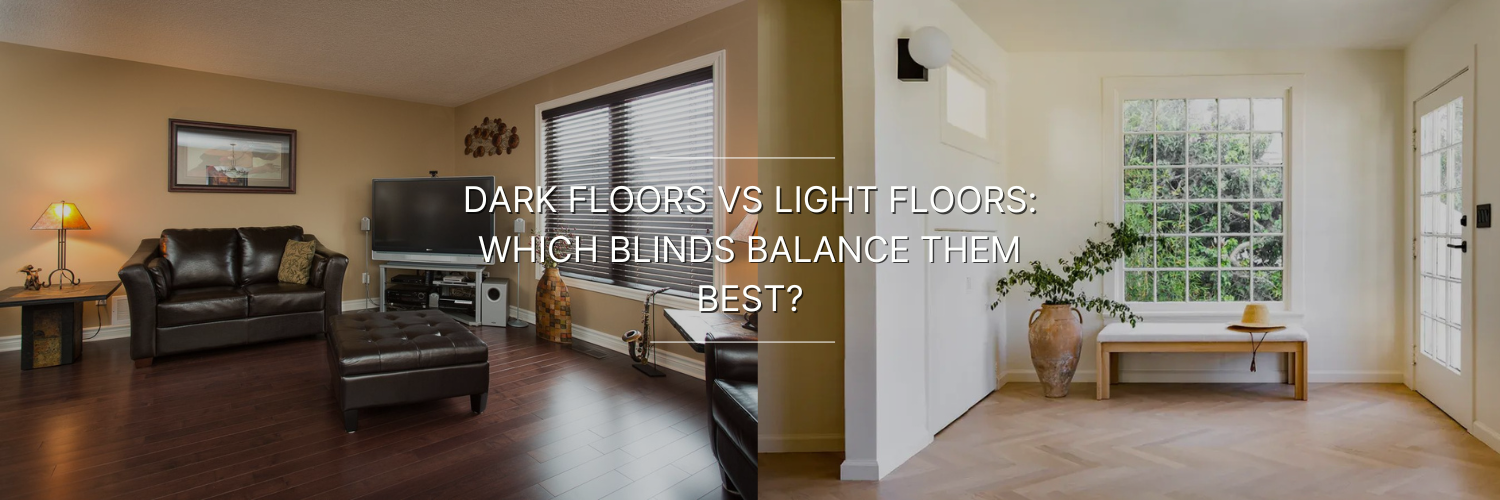
Flooring sets the visual foundation of a room. Dark floors bring depth and drama, while light floors create openness and airiness. What often gets overlooked is how strongly window blinds influence this balance. The right blind choice can soften contrast, enhance light, and tie the entire room together. When floors and blinds work in harmony, spaces feel intentional and comfortable rather than visually heavy or washed out. Whether your home features dark and light flooring, the blinds you choose play a key role in how balanced and comfortable the space feels.
When You Have Dark Floors
Dark wooden floors, such as walnut, teak, or espresso tones, add richness and structure. They work well in living rooms and bedrooms where warmth is desired. However, dark floors can absorb light, making rooms feel smaller if not balanced correctly.
To counter this, lighter blinds work best. Sheer and dimout blinds in soft whites, creams, or warm beiges allow daylight to reflect off the floor surface, preventing the room from feeling enclosed. Roller blinds in light-filtering fabrics keep the look clean and modern, especially in contemporary homes.
Wooden Venetian blinds in lighter finishes also pair beautifully with dark floors. They introduce contrast without breaking the warmth of the space. For bedrooms, cellular blinds in neutral tones help balance darkness while improving insulation and comfort.
When You Have Light Floors
Light floors, such as oak, ash, or blonde wood tones, naturally reflect light and make rooms feel larger. They are ideal for compact homes and apartments. With light floors, the risk is creating a space that feels flat or overly bright.
Here, slightly deeper blind tones help anchor the room. Roman blinds in textured fabrics, soft greys, taupes, or muted earthy shades add depth without overwhelming the space. Fabric roller blinds also work well when chosen in warmer neutrals rather than stark white.
For large windows, vertical blinds in subtle tones help control glare while maintaining visual balance. Wooden Venetian blinds in mid-tone finishes can also add structure and definition against lighter flooring.
Matching Function With Feel
Beyond colour, the function of the room matters. Living rooms benefit from flexible light control through roller, sheer, or vertical blinds. Bedrooms perform better with dimout or blackout blinds that complement flooring tones while supporting rest. Motorised blinds add ease, allowing light to be adjusted effortlessly throughout the day.
The goal is not to match blinds and floors exactly, but to let one support the other. Floors ground the space. Blinds guide light and mood.
Conclusion
Dark and light flooring both bring distinct character to interiors, but their impact depends on how they are balanced. The right blinds soften contrast, enhance light flow, and complete the visual story of a room. When flooring and window treatments are chosen together, spaces feel cohesive, comfortable, and thoughtfully designed. A well-balanced home always begins with harmony between what’s underfoot and what frames the light.