

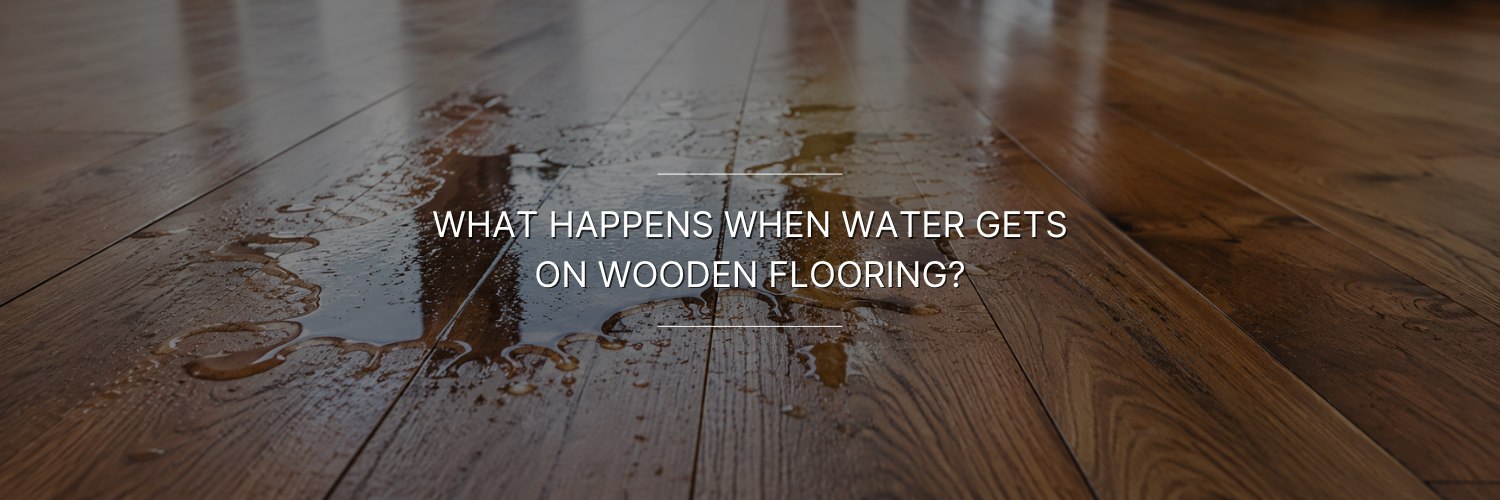
Wooden flooring adds warmth and character to a home, but there’s one thing homeowners often worry about: water.
What happens if you spill a glass of water? What if rainwater enters through the window during monsoon? And can a wooden floor really handle everyday life?
The good news is that a small spill doesn’t mean your wooden flooring is ruined. The real problem is when water is allowed to sit on the surface or seep into the joints for a long time.
So, if water gets on your floor, here’s what you should know.
Why Is Water a Problem for Wooden Flooring?
Wood flooring can react to moisture. When water gets into the flooring, prolonged exposure can lead to issues such as swelling, warping, gaps, or changes in the appearance of the surface.
That’s why flooring care guides generally recommend removing spills quickly and avoiding excessive water during cleaning. The important thing is to understand the difference between an accidental spill and prolonged water exposure.
A glass of water that you wipe up immediately is very different from water that remains on the floor for hours.
What Should You Do If You Spill Water?
Don’t panic and don’t reach for a bucket of water to clean it either.
1. Wipe It Immediately
Use a clean, dry or absorbent microfiber cloth to soak up the water. Don’t leave standing water on the floor.
2. Check the Edges
If it’s a larger spill, check the joints and edges of the planks. These areas can be more vulnerable to moisture getting underneath the surface.
3. Let the Area Dry
Allow the floor to dry naturally with good airflow. Avoid excessive direct heat.
4. Look for Changes
If a large amount of water has been sitting for a long time, look for swelling, raised edges, discolouration, or unusual gaps. If you notice significant changes, it’s better to consult the flooring manufacturer or installer.
Can You Mop Wooden Flooring With Water?
This is where many people go wrong.
More water doesn’t mean a cleaner floor.
A heavily wet mop can leave excess moisture behind, which isn’t ideal for wooden flooring. Flooring-care guidance generally recommends using a well-wrung, lightly damp mop rather than allowing water to sit on the surface.
For everyday cleaning, regular sweeping or vacuuming with a suitable hard-floor setting can help remove dust and grit.
And always follow the specific cleaning instructions provided with your flooring.
How Can You Protect Wooden Flooring From Water Damage?
You don’t need a complicated maintenance routine. A few simple habits can go a long way:
Use mats at entrances: They help catch moisture and dirt before they reach the floor.
Use furniture pads: Felt pads under furniture legs can reduce scratches and surface damage.
Clean spills quickly: This is probably the most important habit.
Avoid excessive water while cleaning: Keep mops damp rather than soaking wet.
Control direct sunlight: Blinds or curtains can help reduce prolonged exposure to sunlight, which can contribute to fading.
What If Water Has Already Damaged the Floor?
If you’ve had a major leak, flooding, or water has remained on the floor for an extended period, don’t assume that simply wiping the surface has solved the problem.
Check for:
- Swollen or raised planks
- Warping
- Persistent dampness
- Discolouration
- Musty odours
- Gaps or changes between planks
For significant moisture exposure, getting the flooring assessed by the manufacturer or a professional is the safest approach.
Final Thoughts
So, what happens when water gets on wooden flooring? A quick spill isn’t necessarily a disaster. The bigger concern is standing water and prolonged moisture exposure.
The simplest rule to remember is:
If water spills, wipe it up quickly.
With the right flooring, proper installation and sensible care, you can enjoy the warmth and style of wooden flooring without worrying about every little spill.
And yes – your wooden floor can still be part of a home that’s meant to be lived in, not tiptoed around.