

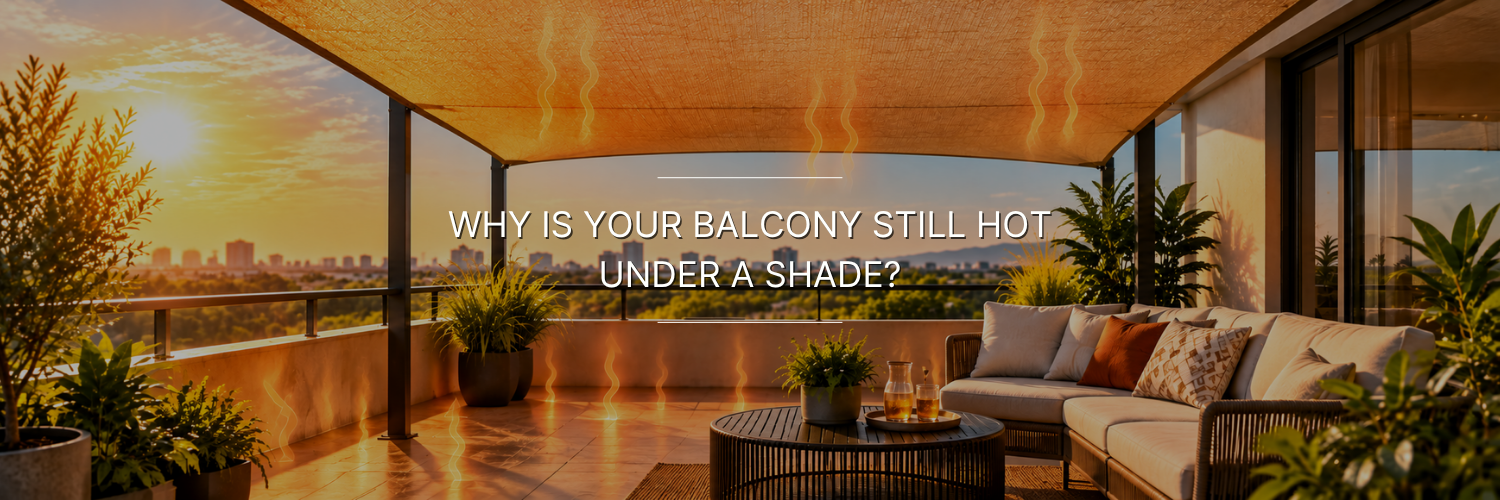
You installed a shade on your balcony, so why does it still feel like an oven by afternoon?
It’s actually quite common. Adding a shade doesn’t always mean you’ve completely blocked the heat. The direction of sunlight, size of the shade, exposed areas and even the balcony flooring can all affect how hot the space feels.
So, before you blame the summer heat, here are a few things worth checking.
1. Your Shade May Not Be Blocking Enough Direct Sunlight
The first thing to look at is where the sunlight is actually coming from.
A shade that works well in the morning may not provide the same protection in the afternoon when the sun changes position. If sunlight is entering from the sides or hitting the balcony floor directly, the space can still heat up.
This is why the size and positioning of your balcony shade matter just as much as having one.
Tip: Look at your balcony during the hottest part of the day. You’ll quickly notice where the sunlight is getting through.
2. Your Balcony May Need a Better Awning
If your current shade only covers a small section, it may not be doing enough to reduce direct heat.
A properly positioned balcony awning can provide broader coverage and help block direct sunlight before it reaches the balcony.
Retractable awnings are particularly useful because you can extend them when you need shade and retract them when you want more open sky.
Vista’s outdoor awnings are designed for balconies, terraces, windows and other outdoor spaces, providing shade while complementing the look of your home.
3. The Balcony Floor Could Be Holding Heat
Here’s something many homeowners overlook: your shade isn’t the only thing affecting the temperature.
Balcony flooring can absorb heat throughout the day and continue radiating it even after the direct sunlight has reduced.
So, if your balcony has dark or heat-absorbing surfaces, simply adding an overhead shade may not make the entire space feel comfortable.
Adding plants, outdoor rugs or suitable furniture can also help make the space feel more comfortable and inviting.
4. You May Need Flexible Shade
Not every balcony needs a permanent covering.
If your seating area is only getting direct sunlight for a few hours, a flexible outdoor shade solution can be more practical.
Outdoor umbrellas can create shade exactly where you need it over a chair, coffee table or seating area. They can also work well for balconies and terraces where installing a larger shade structure isn’t practical.
Vista’s outdoor umbrellas include central pole, retractable, side-post and gazebo styles for different outdoor spaces.
5. Don’t Forget the Windows and Doors
If your balcony is connected to your living room or bedroom through large glass doors or windows, sunlight can still enter your home and heat up the space.
This is where window blinds can complement your outdoor shade.
Roller blinds, cellular blinds and other suitable window treatments can help control harsh sunlight entering through the glass. Vista also highlights the role of blinds and outdoor shade solutions in managing heat and sunlight.
So instead of relying on just one solution, you can combine outdoor shade + indoor light control for better overall comfort.
A Cooler Balcony Starts With Better Shade Planning
If your balcony is still hot under a shade, the problem may not be that the shade isn’t working. It could simply be that the shade isn’t covering the right areas or isn’t suited to how sunlight reaches your balcony.
Look at the sun direction, coverage, flooring and surrounding windows before deciding what to change.
A well-planned balcony shade solution, such as an awning or outdoor umbrella, can make the space much more comfortable while also making it more useful throughout the day.
Because your balcony shouldn’t be a place you avoid every afternoon, it should be a space you actually want to use.