

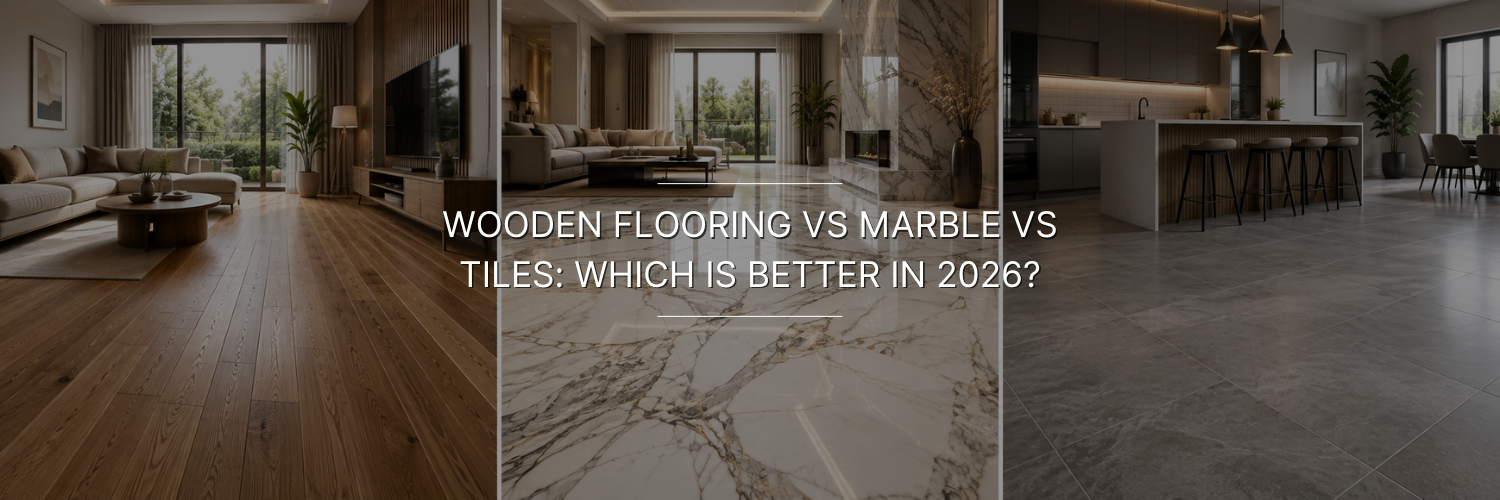
Choosing flooring sounds simple until you actually start looking at your options.
Should you go for the timeless look of marble? The practical appeal of tiles? Or the warmth and character of wooden flooring?
And then comes the bigger question: which flooring is actually better for your home?
There isn’t one answer that works for everyone. Your lifestyle, room size, maintenance preferences, budget, climate and interior style all matter.
So, instead of simply saying one is better than the others, let’s compare wooden flooring vs marble vs tiles and see where each option makes the most sense.
Wooden Flooring: Warm, Comfortable and Timeless
There’s a reason wooden flooring continues to be popular in modern interiors. It brings warmth and natural character to a room in a way that can be difficult to achieve with harder flooring surfaces.
Wood also works beautifully with both contemporary and classic furniture. If you’re creating a bedroom, living room or home office that feels comfortable rather than overly formal, wooden flooring can be a strong choice.
Another advantage is the visual variety. You can choose different wood tones, finishes and patterns depending on the look you want.
For example, Vista offers Classic and Premium wooden flooring, along with its distinctive Chevron Series. The Chevron collection uses an angled V-shaped pattern that adds movement and a more designer feel to the floor.
Best for:
- Bedrooms
- Living rooms
- Home offices
- Premium interiors
- Homeowners who prefer warm, natural-looking spaces
Marble Flooring: Elegant and Naturally Luxurious
Marble has always been associated with luxury.
Its natural veining and polished appearance can make a large room feel grand and sophisticated. It is particularly popular in entrances, living areas and other spaces where homeowners want the flooring itself to make a statement.
But marble also comes with a different maintenance requirement. Natural stone needs appropriate cleaning and care, and its appearance can change over time depending on usage and maintenance.
Best for:
- Large living areas
- Entrances and foyers
- Luxury interiors
- Homes where a polished, statement look is the priority
If you love a dramatic, high-end appearance and don’t mind giving the flooring a little more attention, marble can be an excellent choice.
Tiles: Practical, Versatile and Easy to Customise
Tiles are probably the most flexible option of the three.
There are countless colours, patterns, textures and finishes available, making it easy to find something for almost any interior.
They’re also a practical choice for areas where spills and frequent cleaning are common.
For kitchens, bathrooms and utility areas, tiles are often a natural choice because of their practicality.
Best for:
- Kitchens
- Bathrooms
- Utility areas
- High-use spaces
- Homeowners looking for plenty of design options
The downside? Depending on the material and finish, tiled floors can feel harder and colder underfoot compared with wood.
Wooden Flooring vs Marble vs Tiles: Quick Comparison
| Feature | Wooden Flooring | Marble | Tiles |
|---|---|---|---|
| Look | Warm & natural | Luxurious & elegant | Highly versatile |
| Comfort | ⭐⭐⭐⭐⭐ | ⭐⭐⭐ | ⭐⭐⭐ |
| Design flexibility | ⭐⭐⭐⭐ | ⭐⭐⭐⭐ | ⭐⭐⭐⭐⭐ |
| Maintenance | Moderate | Moderate to high | Generally easy |
| Warmth underfoot | High | Low | Low to moderate |
| Best for | Bedrooms & living areas | Luxury spaces | Kitchens & bathrooms |
| Style | Timeless | Classic & premium | Modern & versatile |
Which Flooring Is Easier to Maintain?
This is one area where your lifestyle matters more than trends.
Tiles are generally straightforward to clean and are a practical option for busy households.
Marble needs more care to maintain its finish and appearance, particularly because natural stone can be sensitive to certain cleaning products and substances.
Wooden flooring needs regular dust removal and appropriate cleaning, but modern flooring options are designed to make everyday maintenance manageable. Vista’s Classic Series, for example, is positioned as a low-maintenance flooring option that can be maintained with regular sweeping and occasional damp mopping.
The key is simple: choose flooring based on the amount of maintenance you’re genuinely willing to do.
Which Flooring Makes a Small Room Look Bigger?
Here’s an interesting design trick: flooring can influence how spacious a room feels. Light-coloured wooden flooring can make a compact room feel brighter and more open. Patterns can also influence how the eye moves around a space.
Vista’s Chevron Flooring, for example, creates a directional V-shaped pattern that adds movement and can create a stronger sense of visual depth. For smaller rooms, pair lighter flooring with simple furniture and uncluttered window treatments. This keeps the space visually open without making it feel empty.
Final Thoughts
Flooring is one of those decisions you’ll live with for years, so it’s worth looking beyond what’s trending on Instagram or Pinterest. Think about how the room is used. Consider maintenance. Look at the amount of natural light. Think about how the flooring will work with your furniture and window treatments.
And most importantly, don’t choose a floor just because it looks beautiful in a showroom.
Choose one that will still make sense when you’re living on it every day. That’s the real difference between choosing a floor and choosing the right floor.