

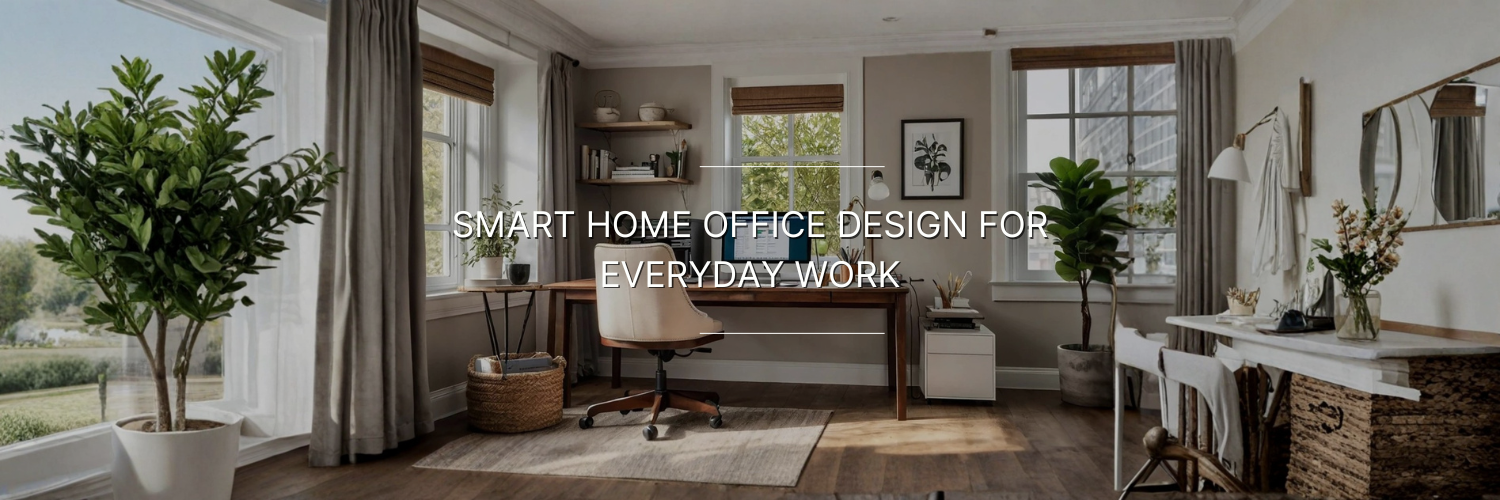
A home office is no longer a temporary corner with a desk and chair. It is a space where focus, comfort, and routine come together every day. The way light enters the room, how sound travels, and even what lies underfoot can influence productivity. Thoughtful design choices make the difference between a workspace that drains energy and one that supports it.
This is where the right interior elements begin to matter.
Light Control That Supports Focus
Natural light boosts alertness, but uncontrolled sunlight can cause glare, screen reflections, and eye strain. Roller blinds and sheer dimout blinds help manage brightness without darkening the room completely. They allow daylight to filter in evenly, keeping the space bright yet comfortable for long work hours.
For windows that receive strong sun, cellular blinds are especially effective. Their layered structure softens light while also providing insulation, helping the room maintain a stable temperature through the day. For those who prefer convenience, motorised blinds allow quick adjustments as light changes, without interrupting work.
Privacy Without Isolation
Home offices often sit close to living areas or face neighbouring buildings. Visual privacy becomes essential for focus and comfort. Vertical blinds and aluminium Venetian blinds offer controlled visibility, letting you tilt or adjust slats to block distractions while keeping the room from feeling closed off.
Layered window solutions using curtain tracks and rods also work well. A light sheer for daytime privacy combined with a heavier layer for focused work hours creates flexibility without clutter.
Flooring That Grounds the Space
What’s underfoot plays a quiet but important role in how a workspace feels. Wooden flooring adds warmth and reduces the cold, echoing feel that hard surfaces often create. It helps the room feel calmer and more settled, especially during long hours spent indoors.
Different flooring finishes allow you to define the mood of the office, whether it’s light and minimal or warm and structured. A well-chosen floor also improves acoustics, reducing noise and making calls feel clearer and more controlled.
Comfort Beyond the Desk
A productive workspace is not just about the desk. Comfortable seating areas, controlled light, and a sense of order all contribute to better workdays. Thoughtful use of blinds, flooring, and window hardware helps create a space that feels intentional rather than improvised.
Motorised solutions further simplify daily routines, allowing the workspace to adapt effortlessly from morning focus to evening wind-down.
Conclusion
A perfect home office is built on comfort, control, and consistency. With the right window treatments, flooring choices, and smart solutions, workspaces become calmer, brighter, and easier to use every day. When design supports how you work, productivity follows naturally, and the home office becomes a place where focus feels effortless rather than forced.